
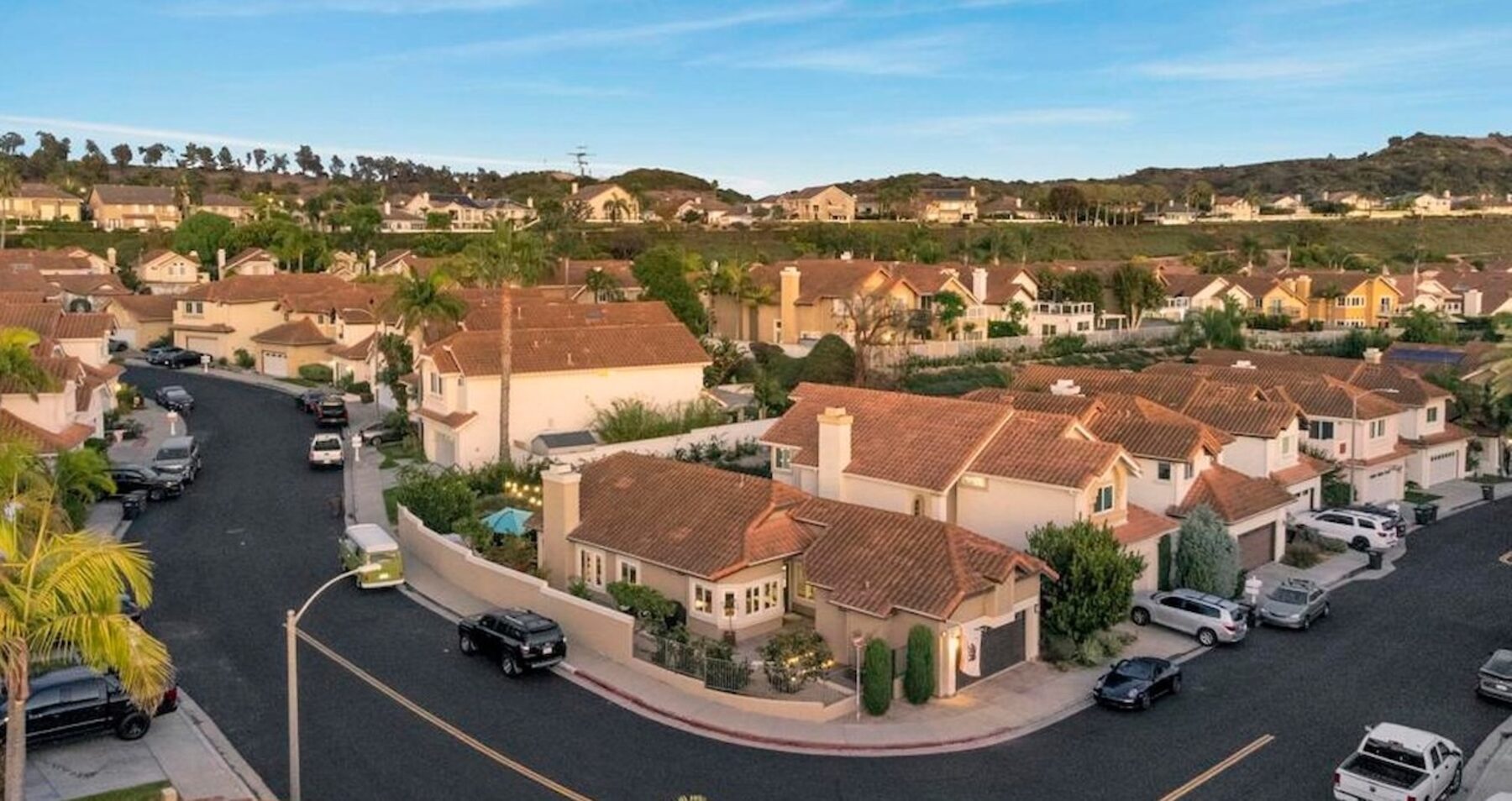
Accessory dwelling units, often called granny flats, casitas or backyard units, were most of the new housing permitted in San Clemente in 2025. For a buyer they raise two questions at once: what can I build here, and is the unit that already exists on this property legal? This guide uses the City's own ADU documents, a state review of the City's ordinance, the Orange County Assessor, and the City's housing report to answer both. It is general information, not legal advice, and ADU rules have changed often, so confirm anything that matters with the City's Planning Division.
How we put it together. We read the City's ADU information packet, the text of its ADU ordinance (Section 17.28.270 of the Municipal Code, as posted on the City's website), the October 14, 2025 letter from California's Department of Housing and Community Development reviewing that ordinance, the Orange County Assessor's tips for new owners, and the City's 2025 General Plan Annual Progress Report. Where those sources disagree, we say so.
What counts as an ADU in San Clemente?
The City's packet defines an ADU as a unit with complete independent living facilities for sleeping, eating and sanitation. It lists four types. An attached ADU is an addition to the main house. A detached ADU is a separate building, either new construction or a converted accessory structure. A junior ADU, or JADU, is a unit of no more than 500 square feet inside a single-family house, with its own entrance and either its own bathroom or a shared one. An ADU conversion turns existing space, such as a bedroom, a non-living area or an accessory building, into a unit.
ADUs are allowed on lots zoned for residential and mixed use when the criteria are met. For a buyer the useful distinction is between a unit that was permitted and one that was not. A garage turned into a bedroom with a kitchenette, without permits, is not an ADU in the eyes of the City or an insurer, and it can become your problem after closing.
What size, height and setbacks does the City allow?
The City's packet describes two routes. Some ADUs qualify for the streamlined route, which needs only a building permit and follows the state's rules. Others need a building permit and an ADU permit, and follow the City's development standards, which are somewhat stricter. The table below summarizes the main numbers as the City's documents state them.
| Standard | Streamlined detached ADU (building permit only) | ADU needing an ADU permit |
|---|---|---|
| Maximum size | 800 square feet | 850 sq ft for a studio or one bedroom, 1,000 sq ft for two bedrooms. No more than two bedrooms |
| Attached ADU | Not applicable | The same size limits, and no more than 50% of the existing home's floor area |
| Height | 16 feet to the peak | 16 feet. The packet says 18 feet near a transit stop, plus 2 feet to match the roof pitch |
| Side and rear setbacks | 4 feet | 4 feet, and 5 feet from the main house |
| Front setback | Not required for the streamlined route | 20 feet, and no closer to the street than the main house's living area |
| Lot coverage | Not applied to the streamlined route | 50%, though no rule can require an ADU smaller than 800 square feet |
| Parking | None required | One off-street space, with exceptions such as being within half a mile walking distance of a transit stop |
| Review time | 60 days from a complete application | 60 days from a complete application |
A few more City rules matter to a buyer. Fire sprinklers are required in the ADU if they are required in the main house. The ADU needs its own entrance and a separate bathroom, except for a JADU. A converted ADU inside an existing house or accessory structure does not need replacement parking if a garage is converted. The City's packet says no impact fee is required for an ADU under 750 square feet, and that detached ADUs generally need a separate utility connection with its own connection fee. The City's FAQ gives a typical review period of 4 to 8 weeks before a permit is issued.
If the property is in the Coastal Zone, the City's packet says Coastal Commission approval is required. The first step is an in-concept review through the City's website, followed by an application to the Coastal Commission, and City permits cannot be pursued further until the Commission approves. Not every San Clemente property is in the Coastal Zone, so ask the Planning Division about the address. The packet also says Homeowners' Association approval is not required for City permits, though the City encourages applicants to cooperate with their association, which is a separate question from what your community's own rules say.
Considering a home with room for an ADU? Compare San Clemente's neighborhoods first. Compare neighborhoods
What rules stay with the unit after it is built?
Several rules follow the ADU for as long as it exists. Rental term. The City's ordinance says an ADU or JADU may not be rented for fewer than 30 days, and the City's FAQ answers the question "Can I Airbnb my ADU?" with a flat no. No separate sale. The ordinance says no ADU or JADU may be sold or otherwise conveyed separately from the lot and the primary dwelling. That means an ADU is part of the house you buy, not a separate property. Rentals are allowed. The ADU may be rented, which is why many buyers look at them for income. Our October market update and property tax and insurance guide show other costs to weigh against any rental income.
The City's short-term rental rules are separate and strict. As we noted in our guide to what is being built in San Clemente, short-term lodging units are allowed only in certain zones, and the ADU rules independently bar rentals under 30 days.
Does the owner have to live on the property?
Here the City's own documents disagree, and that is worth knowing. The City's current ADU packet and FAQ say owners are not required to live on the property, unless the proposal involves a junior ADU, in which case the owner must live in the main house or the JADU. But the ordinance text posted on the City's website lists a different rule: ADUs permitted before 2020 follow the rule in place when they were built, ADUs permitted from 2020 to the end of 2024 have no owner-occupancy requirement, and ADUs permitted on or after January 1, 2025 are subject to an owner-occupancy requirement.
The state has addressed this. In its October 2025 letter, California's housing department said the owner-occupancy allowance that would have started on January 1, 2025 was removed from state law, so the City must amend its ordinance to remove references to owner occupancy. The practical reading is that the City's current packet follows the state rule, while the posted ordinance text may be out of date. If owner occupancy matters to your plans, ask the Planning Division, in writing, which rule applies to the specific property.
Questions about buying or selling a home with an ADU? Ask Alex. Talk to Alex
What did the state say about San Clemente's ordinance?
On October 14, 2025, the Department of Housing and Community Development sent the City a letter reviewing its ADU ordinance, Ordinance No. 1742, adopted December 20, 2022. The department found that the ordinance does not comply with state ADU law in ten respects and gave the City until November 13, 2025 to respond. The City could either amend the ordinance or adopt it with written findings explaining why it believes it complies. We could not find the City's response or an amendment, so we do not know where it stands.
The ten findings, as we read the letter, cover the following points. They matter to a buyer because they show which rules may change.
| Topic | What the state found, in plain terms |
|---|---|
| Code references | The ordinance cites state code sections that were renumbered in 2024 |
| Unit combinations | State law lets an owner of a single-family lot build one converted ADU, one detached ADU and one junior ADU. The ordinance allowed one ADU plus one JADU |
| Multifamily lots | State law allows up to eight detached ADUs on a lot with an existing multifamily building, not more than the number of existing units. The ordinance allowed two |
| Height | Detached ADUs near major transit can reach 18 feet plus 2 feet for a matching roof pitch. The ordinance said 16 feet |
| Owner occupancy | The state removed the owner-occupancy allowance, so the ordinance's rule for units built after 2025 conflicts |
| Deed restriction | A deed restriction cannot be imposed on an ADU, though it is allowed for JADUs |
| Car share | The ordinance added qualifiers (city-sanctioned, posted) that state law does not |
| Size limits | No rule may require an ADU smaller than 800 square feet with 4-foot setbacks, and the ordinance should be clearer about it |
| Design standards | Requirements to match the main house's look are subjective, and only objective standards are allowed |
| Unpermitted units | State law now requires a path to compliance for units built before 2020. The ordinance said 2018 |
Two lessons. First, the City's packet appears to be partly updated already: it describes the three-unit combination, the 18-foot height near transit, and no owner-occupancy rule for ADUs, which match the state's points. Second, the deed restriction is still in the packet, which says one must be recorded for ADUs. State law, according to the letter, allows deed restrictions for JADUs but not for ADUs. These are the kinds of details that can differ between the posted ordinance, the packet and the state law, which is why a written answer from Planning about your address is worth getting.
How many ADUs are being built in San Clemente?
More than any other type of new home, according to the City's own housing report. The 2025 General Plan Annual Progress Report, published in March 2026, counts 47 housing units permitted in 2025, of which 37 were ADUs, and 43 units completed, of which 33 were ADUs. Six were single-family detached homes, four were in small buildings of two to four units, and none were in buildings of five or more. We cover the full picture in our guide to what is being built in San Clemente. If you are buying, that means ADUs are a common feature of new construction and renovation, and a seller may be able to show a permitted one.
Own a home and wondering how an ADU might affect its value? Get a free valuation. Get a valuation
How does an ADU affect property tax?
An ADU is new construction, and the City's FAQ says so directly: under Proposition 13 the County Assessor will appraise new construction at fair market value. The Orange County Assessor's tips for new owners add detail. New construction is taxable, but it does not trigger a reassessment of the entire property. The market value of the new construction is added to the existing Proposition 13 value, and it is subject to a one-time supplemental assessment on completion. Maintenance or replacement of existing items, such as a roof or kitchen cabinets, is not taxable.
Here is the arithmetic as an illustration, with assumed numbers. If an ADU were assessed at an added value of $250,000 and the total tax rate were about 1.1%, the extra yearly tax would be roughly $2,750, plus a one-time supplemental bill for the part of the first year remaining after completion. These are assumptions to show the method, not predictions. The Assessor sets the real value. If you buy a home that already has an ADU, the purchase itself reassesses the whole property at your price, so the ADU is already part of the base, and the property tax and insurance guide above explains the supplemental bill that follows a purchase.
What should you check before buying a home with an ADU?
Treat an ADU like a separate part of the inspection. These are the items we would ask about. They are general guidance, not legal advice.
- Permit and final inspection. Ask for the building permit and proof that the work passed final inspection. A unit without a final is a risk to you, not the seller.
- The type of unit. Confirm whether it is an ADU, a JADU or an unpermitted conversion, and whether the size and bedroom count match the permit.
- Recorded documents. Ask your title company whether any deed restriction or other document was recorded for the unit, and read it. The City's packet says one is recorded before a building permit issues.
- Coastal Zone. If the property is in the Coastal Zone, ask for the Coastal Commission approval.
- Utilities and safety. Ask whether the unit has its own utility connections where required, fire sprinklers if the main house has them, and working smoke and carbon monoxide alarms.
- Rental history and leases. If it is rented, ask for the lease, the rent and the term. The City requires terms of 30 days or longer.
- Insurance. Ask your insurance agent how the unit is covered and whether rental use changes the policy. Our insurance guide lists what to ask.
- HOA documents. If there is an association, read its rules, even though the City says association approval is not required for City permits.
- Lender and appraiser. Ask how your lender and appraiser will treat the unit and any rental income.
- Written confirmation from the City. Ask Planning for written confirmation of the unit's status, and which version of the rules applies.
Thinking about the cost of owning near the coast? Read the tax and insurance guide. Tax and insurance guide
What if you want to build an ADU after you buy?
The City's packet lays out the steps. If the property is in the Coastal Zone, start with an in-concept application on the City's website, then apply to the Coastal Commission, and wait for approval before pursuing City permits. Otherwise, apply electronically for a building permit, with the standard materials plus an address exhibit, photographs, evidence of Coastal Commission approval if applicable, and the deed restriction the City requires. The City must act within 60 days of a complete application, and its FAQ gives a typical review period of 4 to 8 weeks.
Budget for more than the building. The City's packet notes utility connection fees for detached ADUs, and the Assessor will add the new construction's value to the property's assessed value. We did not find a sourced figure for typical construction costs in San Clemente, so get contractor bids rather than relying on a rule of thumb. If you are weighing a purchase with an ADU against a lot where you would build one, the difference is mostly time and risk.
If you are comparing neighborhoods for a home with room for an ADU, our neighborhood guides explain what each area is like, and our buying guide covers the process. If you are selling a home with an ADU, the permit and final inspection are the documents buyers will ask for first.
Thinking about buying a home with an ADU, or adding one? Alex can help you ask the right questions and check the paperwork.
Frequently asked questions about this topic
What is an ADU?
An accessory dwelling unit is a second, independent home on a lot with a main house. It can be attached, detached or converted from existing space. A junior ADU is a unit of no more than 500 square feet inside a single-family house.
How big can an ADU be in San Clemente?
Under the City's packet, a streamlined detached ADU can be up to 800 square feet and 16 feet tall with 4-foot side and rear setbacks. ADUs needing an ADU permit can be up to 850 square feet for a studio or one bedroom and 1,000 square feet for two bedrooms. No more than two bedrooms are allowed.
Can I rent my ADU on Airbnb?
No. The City's ordinance bars rentals shorter than 30 days, and its FAQ says short-term rentals such as Airbnb are not allowed with ADUs.
Can an ADU be sold separately from the house?
Under the City's rules, no. An ADU may not be sold or conveyed separately from the lot and the primary dwelling.
Do I have to live on the property if I have an ADU?
The City's current packet says owners are not required to live on the property unless there is a junior ADU. The ordinance text posted on the City's site lists a different rule for ADUs permitted from 2025, and the state said that rule conflicts with state law. Ask Planning which applies.
How long does it take to get an ADU permit?
The City must act within 60 days of a complete application, and its FAQ gives a typical review period of 4 to 8 weeks. Properties in the Coastal Zone need Coastal Commission approval first.
Will an ADU raise my property taxes?
Yes. The City says the Assessor will appraise new construction at fair market value. The Assessor says new construction is added to the existing value and does not reassess the whole property, with a one-time supplemental assessment on completion.
Did the state find a problem with San Clemente's ADU rules?
In an October 14, 2025 letter, California's housing department found that the City's ADU ordinance does not comply with state law in ten respects. We could not find the City's response or an amendment.
How do I know whether an ADU on a home I want to buy is legal?
Ask for the building permit and final inspection, check recorded documents with your title company, confirm Coastal Commission approval if needed, and ask Planning for written confirmation.
Can an unpermitted ADU be legalized?
The City's FAQ says yes, if it can be made to satisfy all current requirements. The state letter also says state law requires a path to compliance for units built before 2020.
Want a current San Clemente listing search, recent sales for your street, and a full carrying-cost comparison at your budget?

Alex Yu
My approach is simple: educate first, advise second. I'll give you an honest, block-by-block read on San Clemente so you can make the best-informed decision, whether you're buying, selling, or just exploring.
Further reading
- City of San Clemente ADU information packet (PDF)
- City of San Clemente ADU ordinance text, Section 17.28.270 (PDF)
- California HCD letter to San Clemente on its ADU ordinance, October 14, 2025 (PDF)
- California HCD: ADU Handbook
- California HCD: Accessory dwelling units
- Orange County Assessor: Property tax tips for new owners (PDF)
- Property taxes and insurance on a $2M San Clemente home
- What is being built in San Clemente
- Buying a single-family home in San Clemente
- San Clemente neighborhoods
- San Clemente beaches
Figures are from the cited sources and change over time. Confirm current details with Alex or the MLS before making decisions.